



Let’s start a journey that brings your vision to life! 40 hours proof of concept for $3,500. Send your brief →

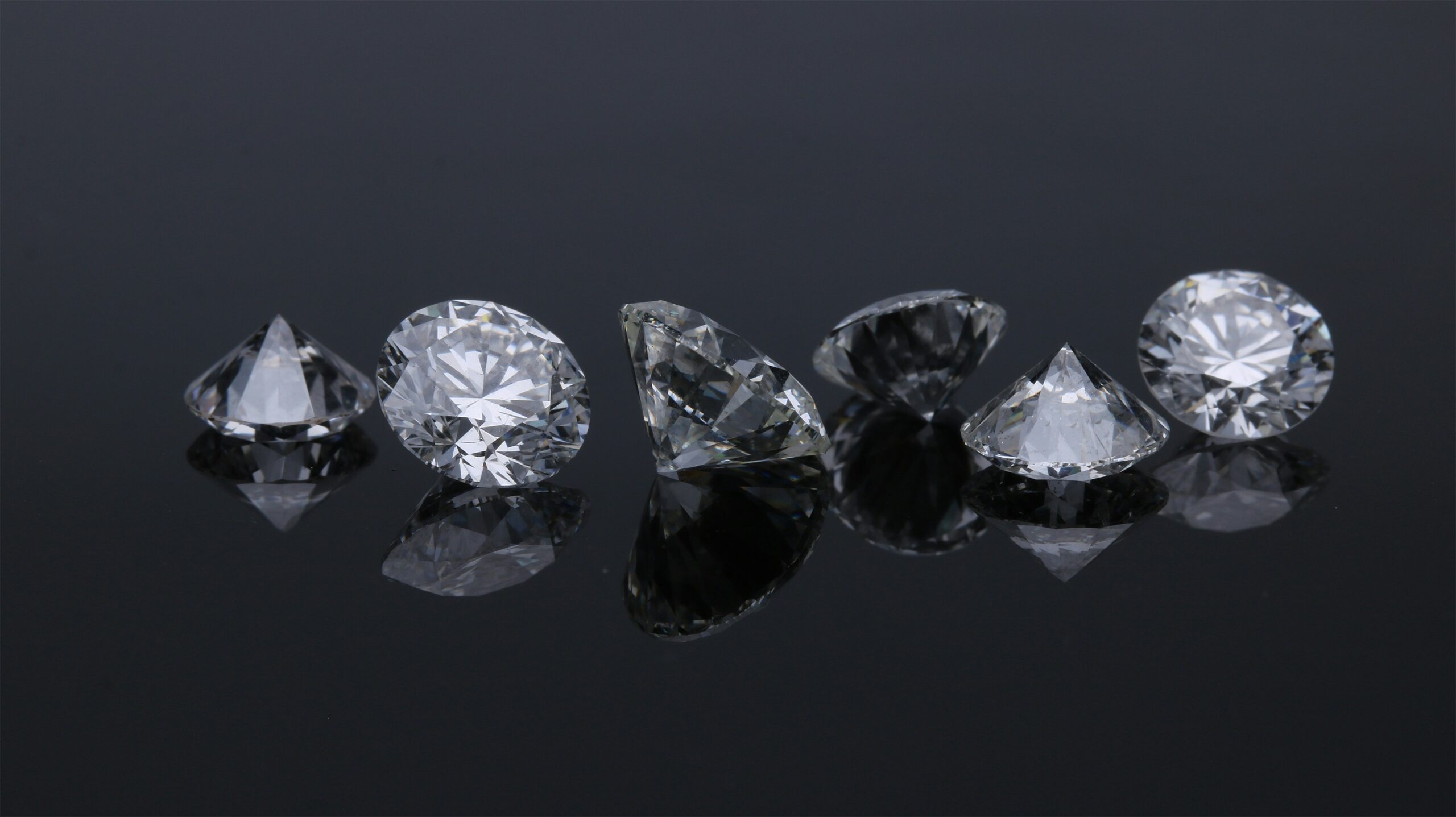
Lab-grown diamonds are real diamonds, chemically and physically identical to mined diamonds, but created in a laboratory. They offer significant advantages in affordability, ethical sourcing, and environmental sustainability, typically costing 60-90% less than natural diamonds.
The choice between lab-grown and natural diamonds depends on your personal priorities: if you value cost-effectiveness and ethics, a lab-grown diamond is an excellent choice; if you prioritize tradition, perceived rarity, and potential long-term value, a natural diamond may be more suitable.
The perception of diamonds as exceedingly rare and precious gems is a narrative that has been carefully cultivated over more than a century, but it stands in stark contrast to their actual geological abundance. For much of the 20th century, De Beers held a near-total monopoly over the global diamond trade, controlling not only the mining of diamonds but also their distribution and marketing.
This monopoly was established in the late 1800s by Cecil Rhodes, who began by consolidating smaller diamond mines in South Africa. By the early 1900s, De Beers controlled over 90% of the world’s diamond production, a position it maintained for decades [48]. This level of control allowed the company to dictate the price of diamonds by carefully managing the supply.
The “A Diamond is Forever” campaign, launched by De Beers in 1947, is widely regarded as one of the most successful marketing campaigns of all time. The genius of the campaign was its ability to create a powerful and enduring emotional connection between diamonds and the concept of eternal love.
“A Diamond is Forever”
— De Beers, 1947
The campaign was so successful that it transformed the diamond engagement ring from a simple piece of jewelry into a cultural icon. Before this campaign, diamond engagement rings were not a universal tradition, and diamonds were not necessarily the gemstone of choice for such a significant occasion [48].
The widely accepted “rule” that an engagement ring should cost the equivalent of three months’ salary is not a time-honored tradition but a brilliant marketing invention conceived during the Great Depression. In the 1930s, De Beers, facing a catastrophic collapse in diamond sales, launched an advertising campaign with the N.W. Ayer advertising agency [47].
Generational Shift in Attitudes
A 2024 survey revealed that 61% of respondents now believe the three-month salary guideline is outdated, with 54% of Gen Z considering it outdated compared to only 28% of baby boomers [50].
High-Pressure, High-Temperature method mimics natural diamond formation conditions deep within the Earth’s crust.
Chemical Vapor Deposition method uses carbon-rich gas in a vacuum chamber to grow diamonds layer by layer.
One of the most important things to understand about lab-grown diamonds is that they are not “fake” diamonds. They are real diamonds, with the same chemical and physical properties as natural diamonds. Even a trained gemologist cannot tell the difference between a lab-grown diamond and a natural diamond without the use of specialized equipment [117].
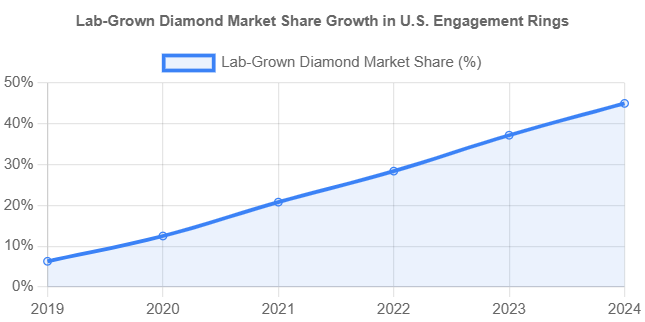
The lab-grown diamond market has experienced explosive growth in recent years. In 2024, lab-grown diamonds accounted for over 45% of all diamond engagement ring purchases in the United States, a dramatic increase from just 6.3% in 2019 [108]. Millennials and Gen Z are particularly receptive to lab-grown diamonds, with two-thirds of Gen Z engagement ring purchasers opting for them.
Industry Response
In response to the growing threat, De Beers announced in 2025 that it would be shutting down its Lightbox lab-grown diamond brand, citing declining profitability due to oversupply and competitive pricing from Chinese and Indian producers [100].
60-80% less expensive than natural diamonds of comparable quality
Guaranteed conflict-free and not associated with human rights abuses
Minimal land disruption and lower carbon footprint
The grading standards for lab-grown and natural diamonds are fundamentally the same, ensuring a consistent framework for evaluating quality. Both types of diamonds are assessed by leading gemological laboratories like the GIA and the International Gemological Institute (IGI) using identical criteria for cut, color, clarity, and carat [117].
While grading scales are identical, reports for lab-grown diamonds are distinct:
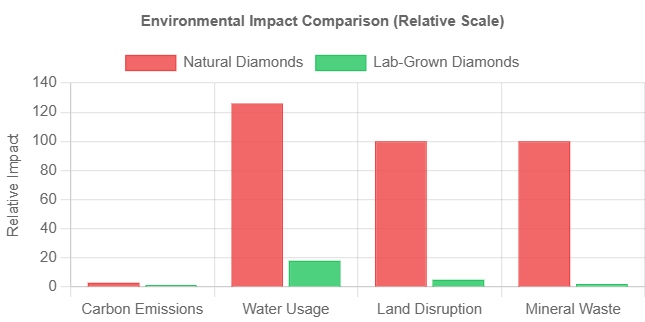
A comprehensive study published in the journal Nature found that the greenhouse gas emissions from mining natural diamonds are, on average, three times higher than those from producing lab-grown diamonds [25].
Water Usage Comparison
Mining a single carat of natural diamond can require up to 126 gallons (480 liters) of water per carat, while lab-grown diamond production requires significantly less water and generates no mineral waste [117].
The issue of conflict diamonds, also known as blood diamonds, has cast a long shadow over the natural diamond industry. These diamonds are mined in areas controlled by rebel forces who use the profits to fund their military activities, often leading to widespread violence, human rights abuses, and the displacement of civilian populations [126].
The Kimberley Process Certification Scheme, established in 2003, has been criticized for:
The idea that natural diamonds are a good investment is a long-standing belief, but it should be approached with caution. While some rare and exceptional diamonds have appreciated significantly in value, the vast majority of diamonds sold for engagement rings are not considered investment-grade. A natural diamond will typically retain between 25% and 50% of its original value [124].
Lab-grown diamonds currently have very low to no resale value. As the technology for producing lab-grown diamonds continues to advance, the cost of production has been steadily decreasing, which has led to a corresponding decline in their retail prices [127].
If you have a limited budget, a lab-grown diamond will allow you to purchase a larger or higher-quality stone. For the price of a 1-carat natural diamond, you might be able to purchase a 2-carat lab-grown diamond of similar quality.
If you are concerned about the ethical and environmental impact of your purchases, a lab-grown diamond is likely the better choice. Lab-grown diamonds are guaranteed to be conflict-free and have a smaller environmental footprint.
Consider what the ring means to you and your partner. Some may feel that a natural diamond’s billions of years of history has romantic significance, while others may find meaning in the ethical choice of a lab-grown diamond.
The rise of lab-grown diamonds is leading to a bifurcation of the diamond market. On one side, you have the market for lab-grown diamonds, focused on affordability, accessibility, and ethical sourcing. On the other side, you have the market for natural diamonds, focused on exclusivity, rarity, and tradition.
Generational Impact
Millennials and Gen Z are playing a major role in driving the shift towards lab-grown diamonds, with two-thirds of Gen Z engagement ring purchasers opting for lab-grown diamonds [108].
| Feature | Lab-Grown Diamonds | Natural (Mined) Diamonds |
|---|---|---|
| Origin & Formation | Created in controlled laboratory environments using HPHT or CVD processes. Formation takes several weeks to months. | Formed naturally over 1 to 3.5 billion years under extreme heat and pressure deep within the Earth’s mantle. |
| Chemical & Physical Properties | Identical to natural diamonds. Composed of pure carbon in a crystalline structure. Hardness of 10 on Mohs scale. | Composed of pure carbon in a crystalline structure. Hardness of 10 on Mohs scale. |
| Appearance | Indistinguishable from natural diamonds to the naked eye. Can only be differentiated using specialized equipment. | Indistinguishable from lab-grown diamonds to the naked eye. |
| Cost & Value | Significantly more affordable, typically costing 60-90% less than comparable natural diamonds. | More expensive due to perceived rarity, high mining costs, and controlled market supply. |
| Investment & Resale Value | Currently have very low to no resale value. The market is new, and prices are falling. | Traditionally considered to have better resale value, though often lower than original retail price. |
| Environmental Impact | Generally lower impact. Requires less land disruption and mineral waste. Energy-intensive process. | Significant impact including land degradation, habitat destruction, high water usage, and mineral waste. |
| Ethical & Social Considerations | Marketed as a conflict-free and ethically sourced alternative. Avoids “blood diamond” issues. | Industry linked to human rights abuses, poor labor conditions, and conflict diamonds. Kimberley Process has limitations. |
| Market Perception | Increasingly popular, especially among younger consumers who prioritize affordability, ethics, and sustainability. | Still holds strong position as traditional symbol of luxury, rarity, and enduring love. |